

Luck is what happens when preparation meets opportunity. This quote is often attributed to Seneca, but there’s no official evidence of it. Nevertheless, whoever coined the phrase described exactly how Validator was created.
And in order to understand how Validator came to be, we must go back in time and touch on different events from the past.
How It Started
Let’s first go back to 2015. Marko was (and still is!) working at WP Rocket, and I, Davor (I’m the author of this post 👋), was working at ManageWP. We were both working in support, and we were obsessed with the idea of delivering outstanding customer happiness. This is what brought us together and also how Customer Happiness meetups came to be.
Fast forward to 2018, Marko wrote a script to assist him with analyzing and troubleshooting websites he was working on. Whenever he needed to quickly crawl a site and spot visual and functional issues, the script saved him from checking everything page by page. The script lived in his own codebase for years, and he always had an idea of making it available for everyone else to enjoy its benefits, but still never had the time or the energy to devote to making it happen.
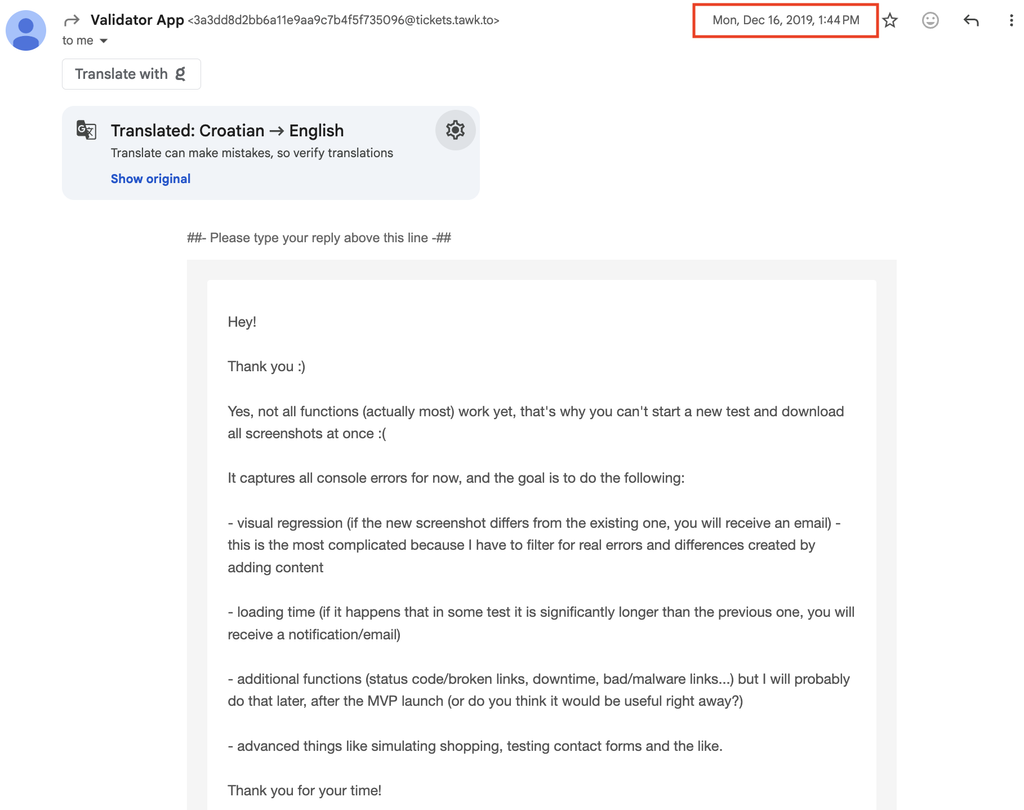
2019. We connect again and Marko sends me an email about what he was building. He also shares with me that he’s looking forward to one day making his script a complete product and available to everyone.
Jumping to 2024. I was working at Automattic as a Technical Account Manager. I was building and maintaining sites with my team, and it was one of the best jobs I’ve ever had. I was juggling around 20 projects at one time, and I had some quite famous clients (cough, Robinhood, cough). At one point, one of the clients asked me to check why their contact form wasn’t working. I quickly found the problem and fixed it, but the main issue was – the contact form hadn’t been working for the previous two days. This is when it hit me – there’s gotta be a way to know this without checking it manually. There has to be a way to automate it! So I made a whole plan for the automation and what else it could include (checkout form, signup form, login form, etc.), and I presented it to the team. Boom! I got the budget, and one of the best developers and people from the other teams also got excited about it. We started building it, and we had a very simple MVP in a month.
Soon afterward, my daughter was born 👶, and I went on parental leave. The developer continued working on it, but the project (and the whole team) was shut down all of a sudden. I was devastated when I heard about it, but I was focused on my family, and I discarded the whole idea as something that could have been, but unfortunately, went down the drain.
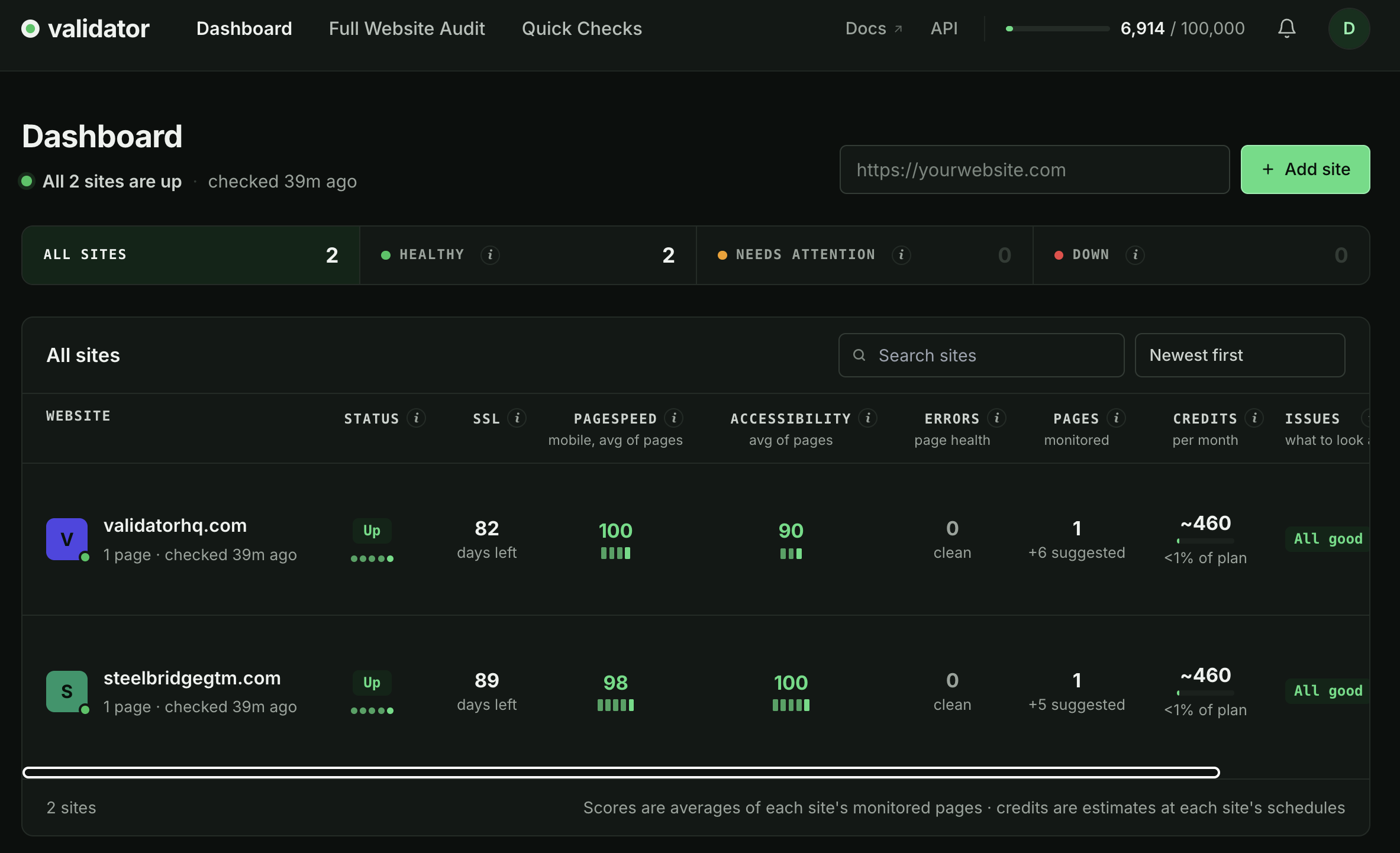
At the beginning of 2026, the idea came back to me. I realized I could actually build it now, so I started working on it from scratch. Little by little, the product started taking shape. But just like it was in Marko’s case, the product lived on my Mac.
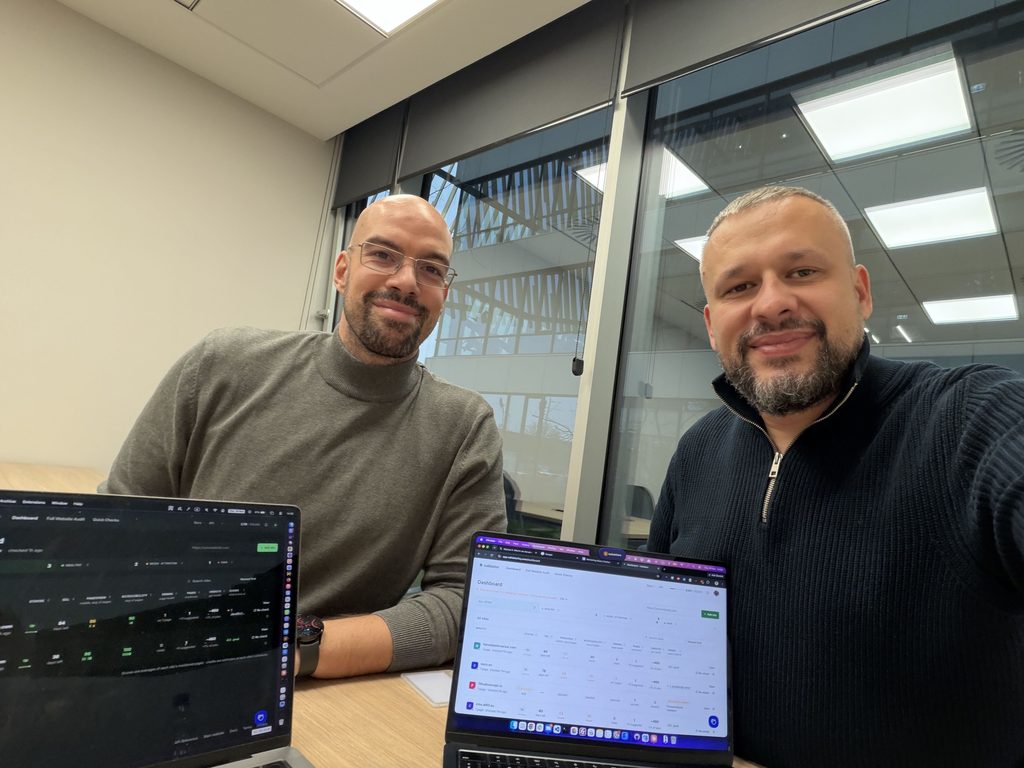
In September 2026, Marko and I met for coffee after not seeing each other for 7 years. While we were catching up, I mentioned what I was working on. Marko almost spilled his coffee (déjà vu)! What I was building was so similar to his product, yet completely different in all the right ways. But what we both quickly realized was that both our products complemented each other. We spent the rest of the coffee sketching out what our two tools could become together if we joined forces.
And on November 19th, we officially launched Validator.
What Problems Does Validator Solve
When we joined our two products and created Validator, we started covering a whole array of items that our products wouldn’t be able to cover on their own. We were able to detect the problems that usually require a dozen tools and a couple of employees. To name just a few:
- Websites go down without the admins noticing it
- Pages get slowed down
- Images stop loading
- Links that used to work no longer work
- Forms stop working
- Checkout throws JavaScript errors
- Booking no longer works
- SSL certificate expires over the weekend
- Dormant accessibility issues
- Unoptimized or missing metadata
- And so, so much more!
You get where I’m going with this. Especially if you’ve just gotten into building and maintaining websites, nobody tells you about these problems right off the bat. And even for a seasoned developer, the worst-case scenario is when you hear about these problems from a customer. And now we’ve come to the Validator’s main pitch, a one-liner that describes the product perfectly:
Your next outage should be a notification, not a customer email.
Who is Validator for
If we had to simplify things to the bone, we could say that Validator does two things and does them really well:
- Monitoring you set up once and forget about. Paste your URL, and the right checks are already on. Uptime, SSL, PageSpeed, accessibility, console errors, visual changes. When something breaks, you get an email. You can also add custom checks for the things only you know matter, like whether your contact form, checkout, booking, or signup still works.
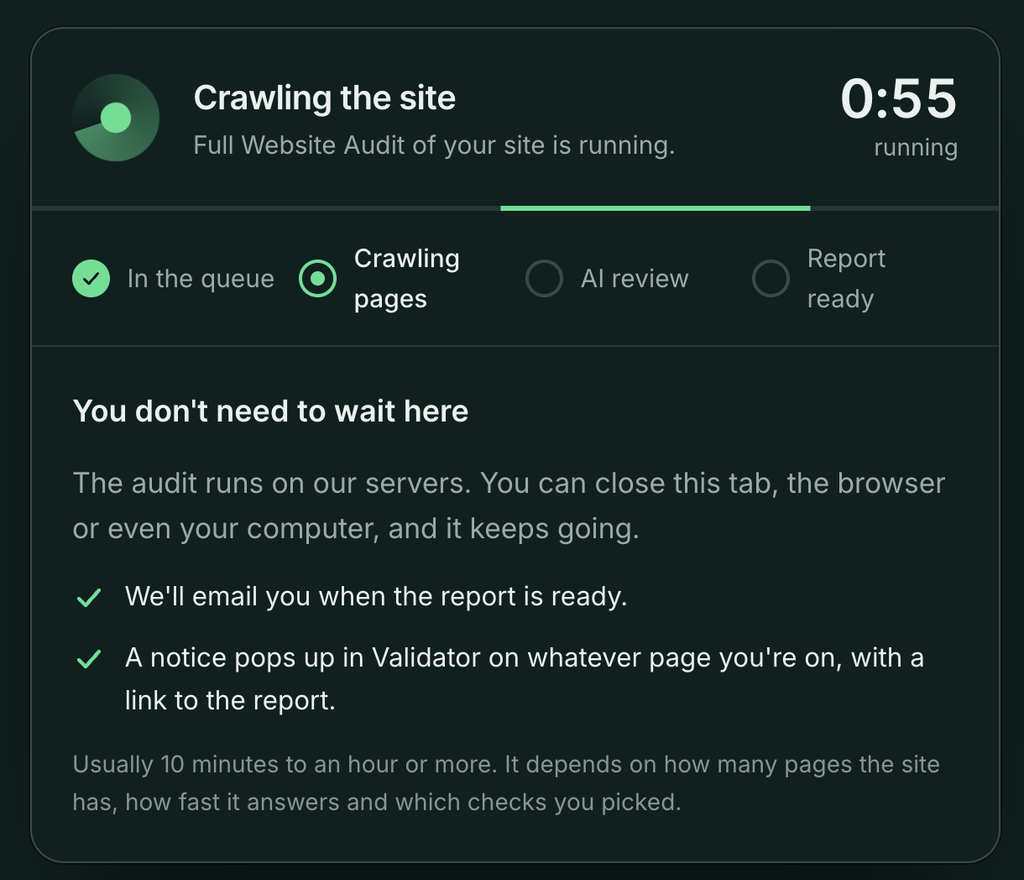
- A detailed, comprehensive full website audit. One run does 100+ checks on all the pages you want across desktop, tablet, and mobile, using 3 browser engines. An AI agent verifies the findings. And you also get a report that tells you what to fix first. You can share it with a client, or hand the markdown version to your own LLM and let it do all the fixing.
So, who is Validator best for? Website owners, web development agencies, WordPress admins, and anyone responsible for a site other people depend on. We believe that Validator’s presence in the world will contribute to the web being filled with fast, clean, and errorless websites. Here’s to it 🥂